Is a Solar Battery Right for Your Home in 2026?
Solar batteries have the potential to transform how a home gets its power. By storing the extra electricity generated by solar panels during the day, a battery lets you use clean, free solar energy at night or during grid outages. But is a solar battery the right investment for your home in 2026?
What Does a Solar Battery Do?
A solar battery stores surplus electricity generated by your rooftop solar panels that isn't immediately consumed. This stored energy can then be used:
- At night, when panels are not generating power
- During cloudy days with reduced solar output
- During grid power outages
- To avoid drawing expensive peak-hour electricity from the grid
Key Benefits of Adding a Solar Battery
Energy Independence
With a well-sized solar-plus-battery system, many Indian households can cover a significant portion of their electricity needs without relying on the grid — particularly during the long, sunny months.
Backup During Power Cuts
Unlike standard on-grid solar systems that shut down during outages (for safety reasons), a solar battery provides continuous power backup — keeping lights, fans, refrigerators and other essentials running.
Reduced Electricity Bills
By consuming your own stored solar power rather than buying electricity from the grid, you pay far less on your monthly bills. The savings compound over the battery's lifetime.
Environmental Benefits
Every unit of solar energy you store and use is one less unit generated from fossil fuels — reducing your household's carbon footprint.
Factors to Consider Before Buying
Upfront Cost
Solar batteries represent a meaningful upfront investment. However, costs have been falling year-on-year. Lithium-ion batteries — the dominant technology — now offer excellent cycle life (5,000+ cycles) that makes them economically attractive over their lifetime.
System Compatibility
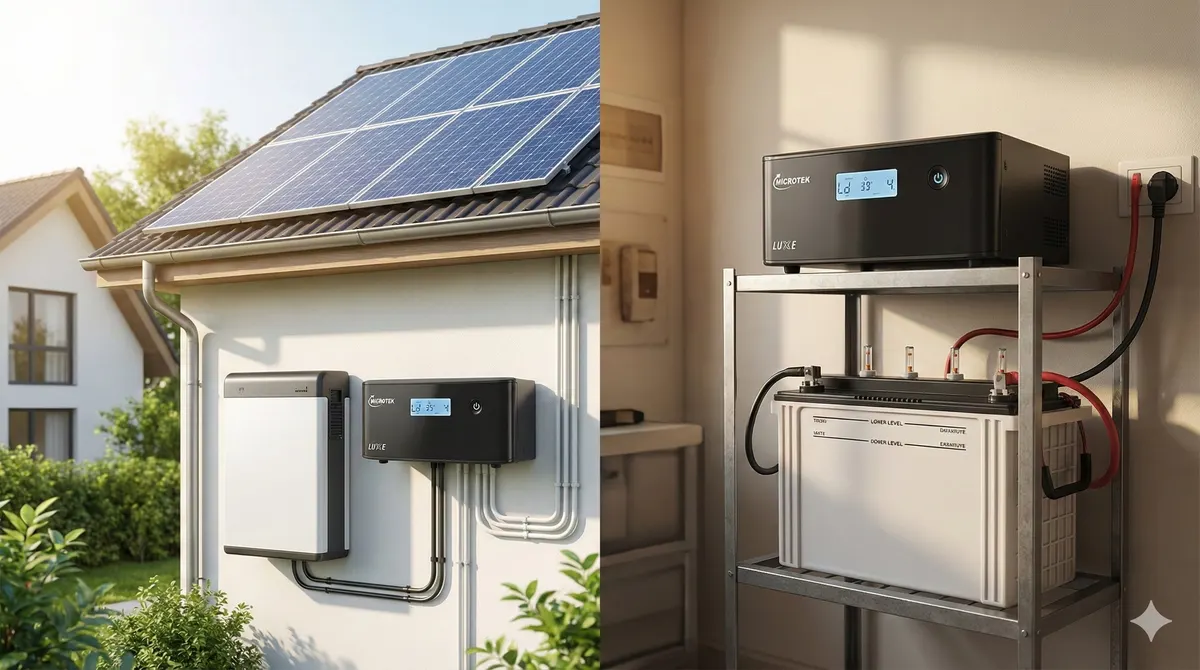
Ensure your solar inverter is compatible with the battery you choose. Hybrid inverters are designed specifically to integrate solar panels, batteries and the grid seamlessly.
Battery Capacity Sizing
| Home Size | Recommended Battery Capacity | Approximate Backup Hours |
|---|---|---|
| 1–2 BHK (basic loads) | 100–150 Ah | 4–6 hours |
| 2–3 BHK (moderate loads) | 150–200 Ah | 5–8 hours |
| 3–4 BHK (higher loads) | 200 Ah+ | 6–10+ hours |
When a Solar Battery Makes Strong Financial Sense
- Your area experiences frequent and prolonged power outages
- Your electricity bills are high (₹3,000+ per month)
- You have an existing solar panel system and want to maximise self-consumption
- You are eligible for government subsidies that reduce the upfront cost
- You plan to stay in your home for 5+ years to recoup the investment
2026 Verdict:
For most Indian homeowners with rooftop solar or considering it, adding a battery storage system in 2026 offers genuine financial and practical benefits — especially with falling lithium-ion prices and strong government support for solar adoption.
Frequently Asked Questions
Q. How long does a solar battery last?
Quality lithium-ion solar batteries deliver 5,000+ charge cycles, typically lasting 8–12 years with proper care.
Q. Does a solar battery work when the grid is down?
Yes — this is one of its most valuable features. A solar battery paired with a hybrid inverter continues supplying power to your home even during complete grid outages.
Q. Is maintenance required for solar batteries?
Lithium-ion solar batteries are virtually maintenance-free. Lead-acid solar batteries require periodic water top-ups and terminal cleaning.