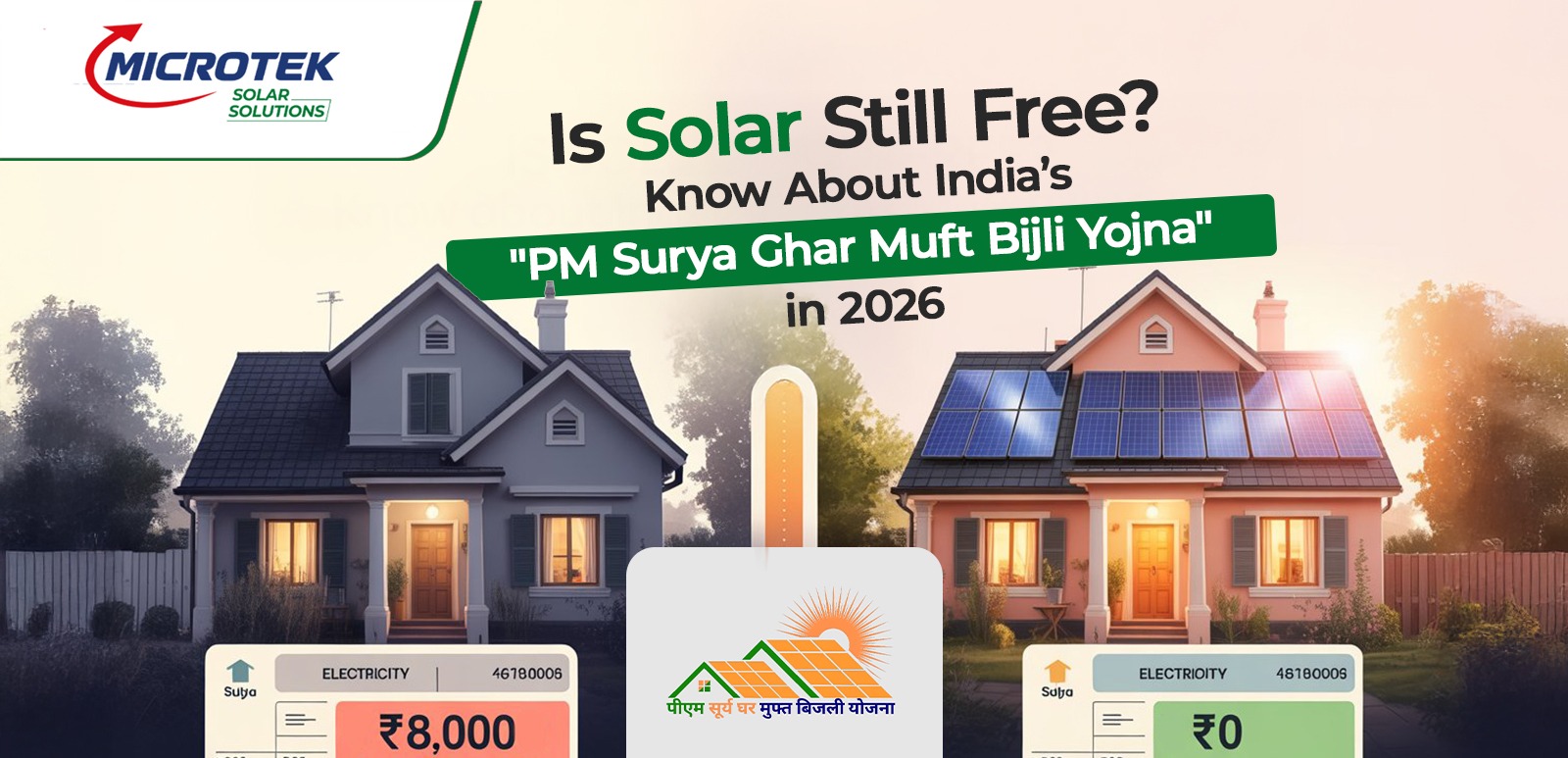
Is Solar Still Free? Know About India's 'Muft Bijli' Scheme in 2026
Solar power uses sunlight to generate electricity. When panels are properly installed, solar power can significantly cut or eliminate monthly electricity bills. India's government has been actively promoting rooftop solar — but is "Muft Bijli" (free electricity) actually a reality in 2026?
What Is the PM Surya Ghar: Muft Bijli Yojana?
The Indian government launched the PM Surya Ghar: Muft Bijli Yojana in 2024 — one of the world's largest rooftop solar programmes. The aim is to install solar panels on one crore (10 million) households across the nation. Under this scheme:
- Rooftop solar panels are installed on homes
- Households generate their own electricity from sunlight
- Eligible homes can receive up to 300 units of solar power free each month
- Central financial assistance (subsidy) reduces installation cost
- Collateral-free, low-interest loans are available for the remaining cost
Important Clarification: Is There a Fixed Subsidy?
A common misconception is that all homes receive a fixed ₹78,000 subsidy. This is not accurate. The subsidy depends on:
- Solar system capacity (size)
- Government guidelines at the time of approval
- Additional state-level subsidies (which vary by state)
- Local electricity distribution company policies
Rather than a fixed amount, financial assistance is dynamic and differs for each household based on these factors.
Is Solar Power Really "Free"?
The phrase "Muft Bijli" literally means free electricity. In practice, it means:
- The government covers a large part of your solar panel installation cost
- You pay a smaller shared cost or take a low-interest loan
- Once installed, sunlight is free and panels generate electricity every day
- You can use a set number of units with little or no monthly bill
Sunlight itself is genuinely free — and the savings on electricity bills over time can be substantial.
Who Can Apply?
The scheme is available to residential households across India. To be eligible, you must:
- Be a resident of India
- Own a property with suitable rooftop space for solar panels
- Have a valid electricity connection
- Not have previously received a solar subsidy for the same system
Applications are made online through the official national portal. The process is fully digital, and subsidies are credited directly.
Net Metering: Selling Surplus Power
Many states allow homeowners to sell surplus solar power back to the electricity grid through net metering. This means that on sunny days when your panels produce more than you use, you earn credits that further reduce your bills.
Progress in 2026:
By early 2026, more than 24–25 lakh homes had solar installed under this scheme, with the programme continuing to expand rapidly across urban and semi-urban areas.
Frequently Asked Questions
Q. How many free electricity units does the scheme provide?
Approximately 300 units per month, though the exact amount depends on panel capacity and state-specific guidelines.
Q. Can I sell extra solar power?
Yes. Many states allow you to sell surplus power back to the grid through net metering.
Q. Does solar power completely eliminate my electricity bill?
For most households with adequate panel capacity, bills reduce dramatically — and in some cases reach zero for a portion of the year. However, very high-consumption homes may still pay reduced bills for grid-supplemented power.