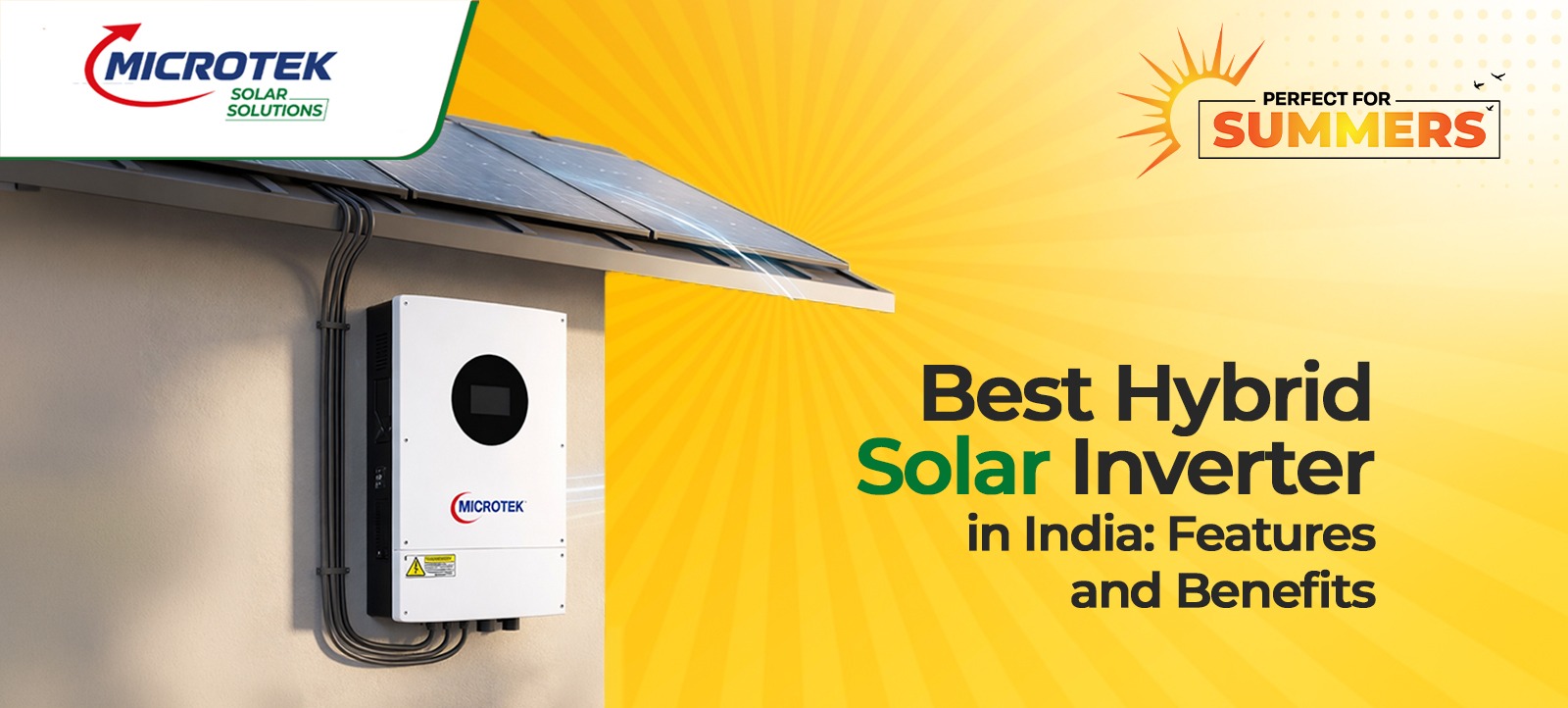
Best Hybrid Solar Inverter in India: Features & Benefits
A hybrid solar inverter is the single most important component of a modern rooftop solar system — it decides how efficiently your panels, battery and the grid work together. Here's what separates a genuinely good hybrid inverter from a basic one.
What a Hybrid Solar Inverter Actually Does
Unlike a basic on-grid inverter that only handles solar-to-grid conversion, a hybrid inverter manages three power sources simultaneously — solar panels, battery storage and the electricity grid — automatically deciding which to draw from or charge based on real-time conditions.
Features That Matter Most
MPPT (Maximum Power Point Tracking)
MPPT continuously adjusts the electrical operating point of your solar panels to extract the maximum possible power, even as sunlight intensity changes through the day. Multiple MPPT channels allow panels facing different directions to be used efficiently.
Programmable Power Priority
The ability to set solar-first, battery-first or grid-first priority lets you tune the system to your electricity tariff structure and backup needs.
Pure Sine Wave Output
Essential for safely running sensitive electronics and inverter-based appliances like modern refrigerators and ACs.
Battery Compatibility
Good hybrid inverters support both lead-acid and lithium battery banks, giving you flexibility to upgrade later without replacing the inverter.
Smart Monitoring
App or web dashboards showing generation, consumption, battery status and historical data help you track savings and spot issues early.
Key Benefits of Choosing a Hybrid Inverter
- Continuous power supply even during grid outages
- Maximised self-consumption of solar power, reducing bills further
- Flexibility to add battery storage now or later
- Eligible for net metering in most states, unlike pure off-grid systems
What to Check Before Buying
- Rated capacity matches your solar array size and home load
- Number and type of MPPT channels
- Battery type supported (lead-acid, lithium, or both)
- Warranty period (5+ years is standard for quality units)
- Local service and support availability
Expert Recommendation:
For most Indian homes, a hybrid inverter with dual MPPT, lithium compatibility and app monitoring offers the best long-term flexibility — even if you start with just solar and add a battery later.