Back to Blogs
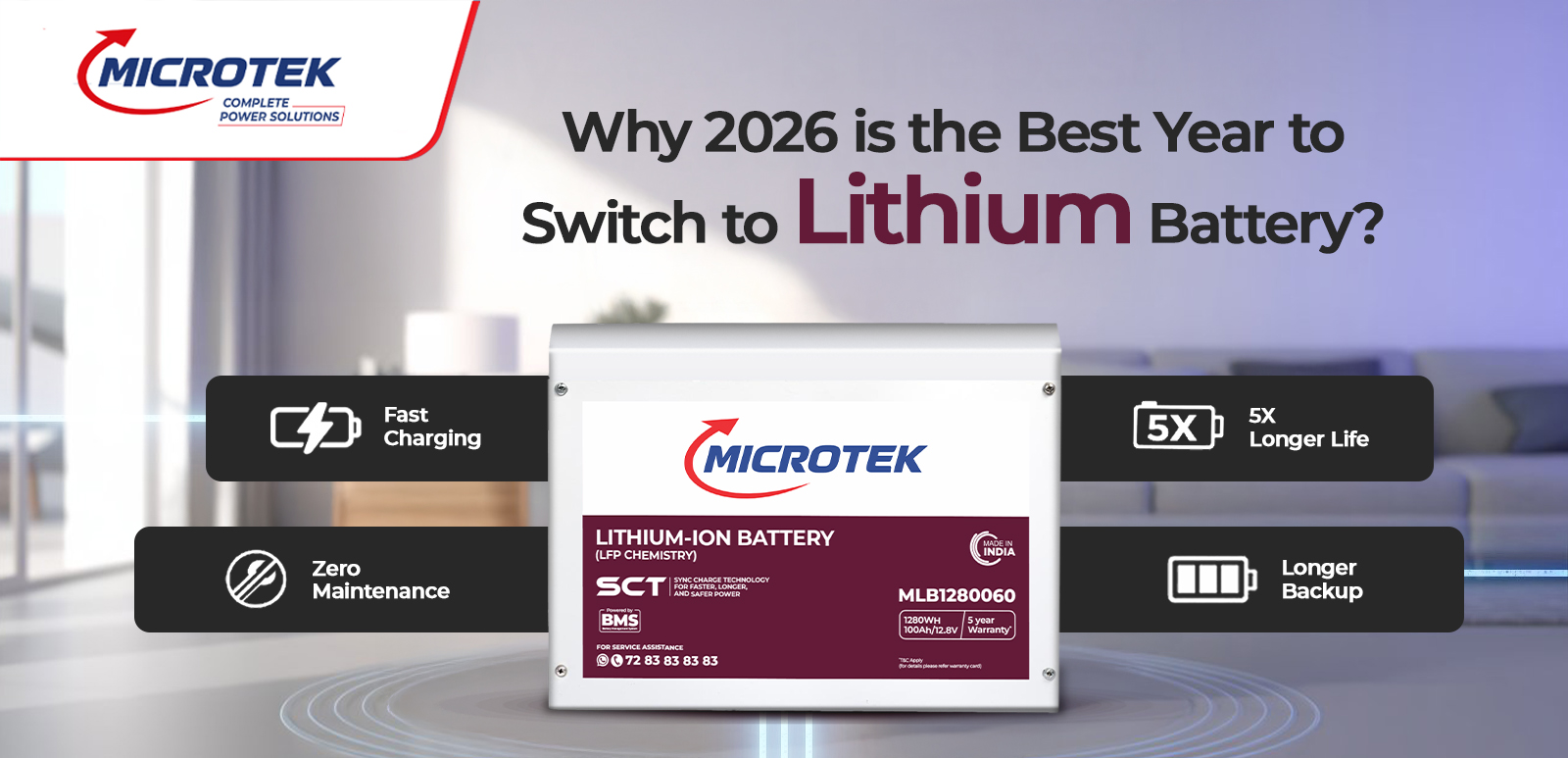
Why 2026 is the Best Year to Switch Your Home to Lithium Battery?
batteries

Why 2026 is the Best Year to Switch Your Home to Lithium Battery?

January 23, 2026
6 min read
By Satyajan Energy Solutions

If you are still using a traditional lead-acid battery for your home inverter, 2026 is the ideal year to make the switch. Falling prices, improved technology, government support for clean energy and a wide product range make lithium batteries more accessible and practical than ever before.

Why Lithium Batteries Are Perfect for Modern Indian Homes

Small apartments and larger homes alike benefit from lithium's compact form factor, zero maintenance and longer service life. Compact lithium-based UPS systems are efficient, lightweight and perfect for urban living.

Key Reasons to Switch in 2026

1. Falling Lithium Battery Prices

The cost of LiFePO4 lithium batteries has decreased significantly over the past three years. Local assembly in India has further reduced prices, making the upfront cost gap between lithium and lead-acid smaller than it has ever been.

2. Much Longer Lifespan

A quality lithium battery delivers 3,500–5,000+ charge cycles versus 1,500–2,000 for a good tubular lead-acid battery. In real terms, this means one lithium battery can outlast two or even three lead-acid replacements.

3. Zero Maintenance

Lead-acid batteries need regular water top-ups, terminal cleaning and periodic professional checks. Lithium batteries require absolutely none of this — saving time, effort and ongoing maintenance costs.

4. Faster Charging

Lithium batteries charge in roughly half the time of lead-acid equivalents. In areas with short power availability windows, this is a critical advantage — your battery is ready faster.

5. Compact and Lightweight

A 150Ah lithium battery weighs approximately 25 kg versus 45 kg for a comparable lead-acid tubular. It also occupies significantly less space — important in urban apartments with limited installation areas.

6. Higher Energy Efficiency

Lithium batteries convert 95–98% of stored energy into usable power compared to 80–85% for lead-acid. This efficiency difference directly reduces electricity consumption during each charge cycle.

7. Ideal for Solar Integration

Lithium batteries handle frequent charge-discharge cycles gracefully, making them the ideal storage partner for rooftop solar systems — particularly important as government solar incentives continue to drive adoption in 2026.

Parameter Lead-Acid (Tubular) Lithium (LiFePO4)
Lifespan4–6 years8–10 years
Charge Cycles~2,0003,500–5,000+
MaintenanceWater top-ups neededNone
Efficiency80–85%95–98%
Weight (150Ah)~45 kg~25 kg
Charge Time8–10 hours3–5 hours

2026 Verdict:

With lower prices, better technology and zero maintenance, lithium is no longer just a premium choice — it is the smart, practical choice for most Indian homeowners upgrading their power backup system this year.

Frequently Asked Questions

Q. Is a special inverter required for lithium batteries?
Most modern hybrid inverters are compatible with lithium batteries. Confirm compatibility with your inverter model before purchasing.

Q. What is the warranty on lithium batteries?
Quality lithium batteries typically come with a 5-year warranty. Always verify the warranty terms before purchase.

Q. Can lithium batteries be used with solar panels?
Yes — lithium batteries are the preferred storage option for solar systems due to their high efficiency and ability to handle frequent charge-discharge cycles.