Best Lithium-Ion Battery for Home Inverters in India
As lithium-ion prices continue to fall in India, more homeowners are considering the switch from tubular lead-acid to lithium for their home inverter. Here's what separates a genuinely good lithium battery from an overpriced one.
What to Look for in a Home Inverter Lithium Battery
Chemistry: LiFePO4 Is the Standard
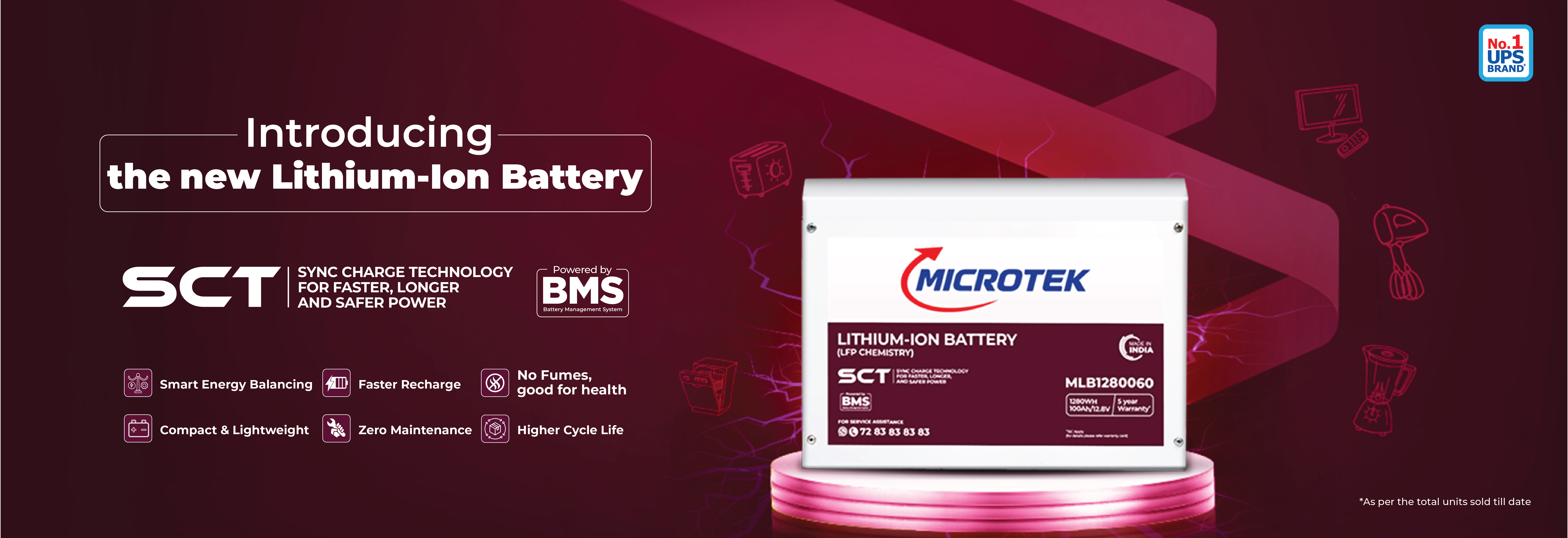
For home backup, Lithium Iron Phosphate (LiFePO4) is the safest and most durable chemistry available — thermally stable and rated for thousands of charge cycles, far outperforming other lithium chemistries for this use case.
Built-In Battery Management System
A quality BMS protects against overcharge, over-discharge, short circuit and thermal issues automatically — this is non-negotiable for home safety.
Capacity Matched to Your Load
Lithium batteries are typically rated in Ah at 12V, 24V or 48V systems. Match capacity to your daily backup needs rather than simply buying the largest available.
Inverter Compatibility
Not every existing inverter supports lithium charging profiles. Confirm your inverter has a lithium mode, or choose an inverter-battery combo designed for lithium from the start.
Lithium vs Tubular: Quick Comparison
| Parameter | Tubular (Lead-Acid) | LiFePO4 Lithium |
|---|---|---|
| Lifespan | 4–6 years | 8–10 years |
| Maintenance | Regular water top-ups | None |
| Weight (100Ah equiv.) | ~30 kg | ~12–15 kg |
| Charging Time | 8–10 hours | 3–4 hours |
Who Should Choose Lithium
- Homes with frequent power cuts needing quick recharge between outages
- Apartments and flats with limited battery storage space
- Households planning to add solar panels in the future
- Anyone who wants to eliminate battery maintenance entirely
Buying Tip:
Always ask for the cycle life rating at 80% depth of discharge — this is the industry-standard way to compare lithium battery longevity across brands.