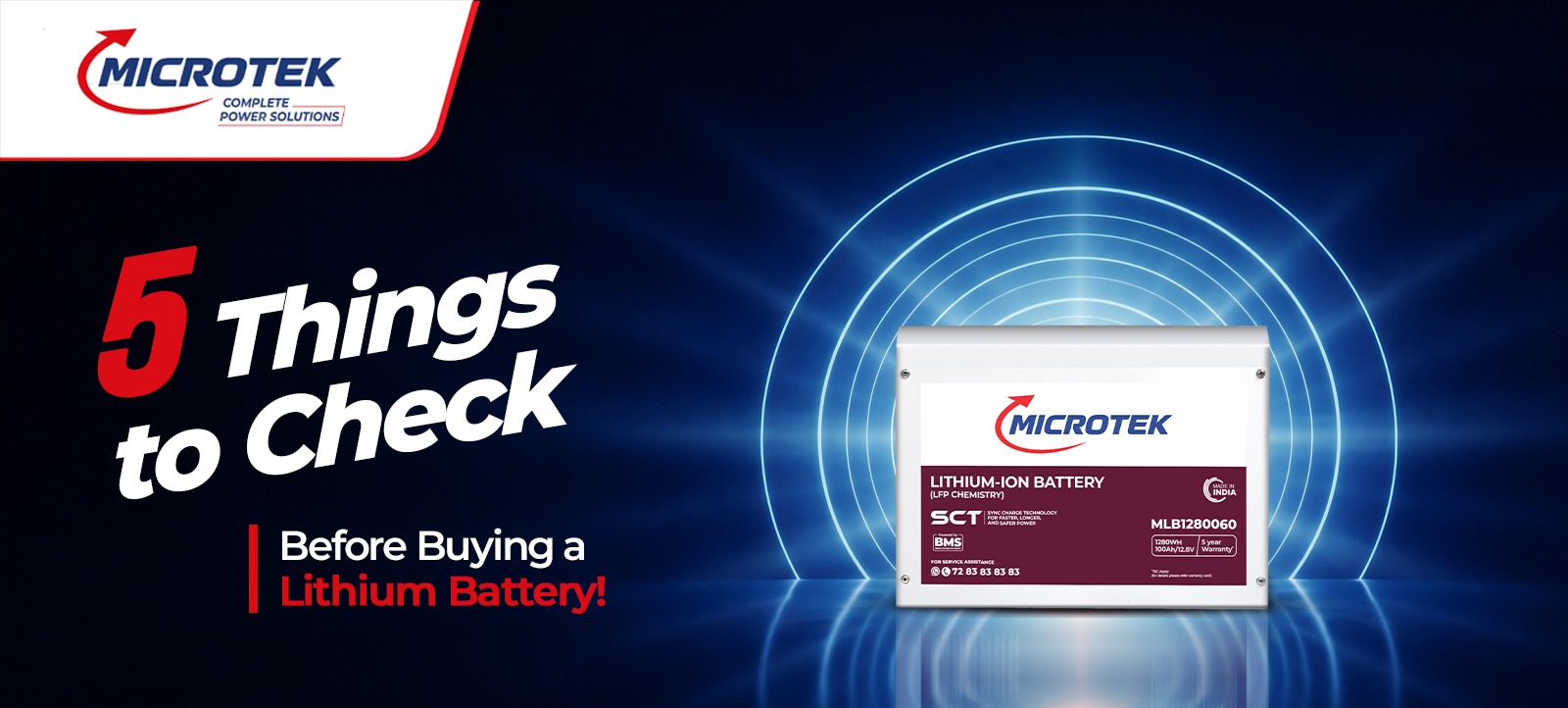
5 Things to Check Before Buying a Lithium Battery
Lithium batteries are becoming more popular in India for home inverters, solar power systems, and backup power solutions. They are more modern, efficient, and long-lasting than traditional lead-acid batteries. However, not all lithium batteries are the same. Before you buy one, there are important things you should check to ensure you get the right battery for your needs.
1. Battery Technology and Safety
First, check the battery technology itself. Not all lithium batteries use the same chemistry. For home use, Lithium Iron Phosphate (LiFePO₄) is the safest and most recommended option because:
- It is thermally stable and highly fire-resistant
- It lasts significantly longer — 3,500 to 6,000 charge cycles
- It is much safer than other lithium-ion types like NMC
Most modern lithium batteries also come with a Battery Management System (BMS) — a smart guardian that protects against overcharging, overheating, short circuits, and over-discharge.
Key Takeaway:
Always choose a battery with LiFePO₄ chemistry and a built-in BMS for maximum safety and longevity.
2. Charging Cycles and Battery Lifespan
Another key factor is how long the battery will last, measured in charge cycles. One charge cycle equals one complete charge and discharge.
| Battery Type | Cycle Life | Expected Lifespan |
|---|---|---|
| Tubular (Lead-Acid) | 1,000–1,500 cycles | 3–5 years |
| LiFePO₄ Lithium | 3,500–6,000 cycles | 8–10 years |
Pro Tip:
When shopping, ask for the cycle life at 80% depth of discharge (DoD). This is the industry standard for comparing battery longevity accurately.
3. Charging Speed and Efficiency
One major advantage of lithium batteries is their rapid charging capability. Here's what to check:
- Charging speed: How fast can it recharge after a power outage?
- Charging efficiency: Does it waste less energy during charging?
- Smart charging support: Does it optimise charging to reduce energy waste over time?
This matters because in areas with unreliable power, quick charging ensures your battery is ready for the next outage, even if power returns for a brief time.
4. Capacity and Power Output
Battery capacity determines how long your appliances will run during a power cut. Capacity is measured in two ways:
- kWh (kilowatt-hours): total energy storage
- Ah (Ampere-hours): charge capacity at a specific voltage
For example, a 100Ah LiFePO₄ battery at 25.6V provides 2.56 kWh of energy — enough to power fans, lights, TV, and a router for several hours.
Also check the continuous discharge rating and peak/surge capacity — important for appliances with high startup currents like motors and refrigerators.
5. Maintenance, Size, and Compatibility
Low Maintenance
Lithium batteries are almost maintenance-free. Unlike lead-acid batteries, you don't need to add water regularly, perform routine servicing, or worry about corrosion or acid leakage.
Compact and Lightweight
Lithium batteries are 50 to 70% lighter and more compact than tubular batteries — easier to install, space-saving for apartments, and safe for indoor placement.
Inverter Compatibility ← Most Important Check
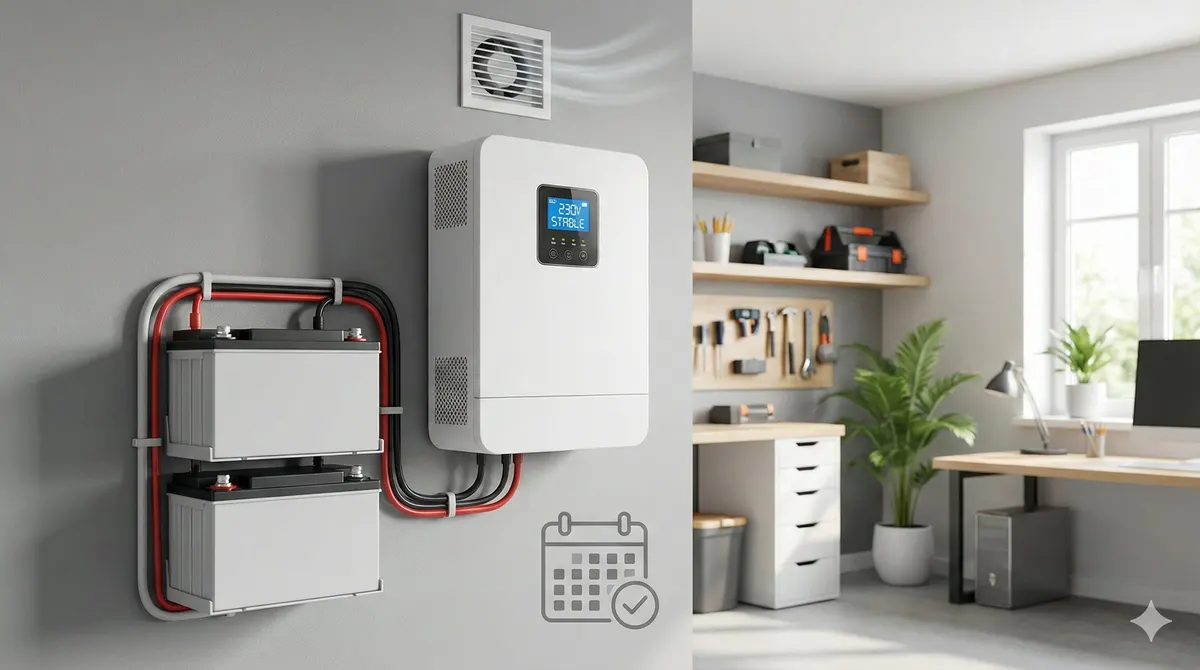
Not all inverters work with lithium batteries. Older inverters designed for lead-acid batteries may overcharge or undercharge your lithium battery, shorten its lifespan, or trigger error codes.
⚠️ Before You Buy:
Confirm your inverter supports lithium battery mode and has programmable charging parameters. If you're unsure, choose an inverter-battery combo specifically designed for lithium — like the Microtek i-Lithium series.
Summary Checklist
- ✅ Battery chemistry: LiFePO₄ preferred over NMC or other types
- ✅ BMS protection: Overcharge, short circuit, deep discharge, thermal
- ✅ Cycle life: Minimum 3,500 cycles at 80% DoD
- ✅ Charging speed: Fast charge capability and smart charging support
- ✅ Capacity: Matches your load and required backup duration
- ✅ Inverter compatibility: Verify lithium battery mode is supported
- ✅ Warranty: Minimum 3 years; 5 years from reputed brands
Frequently Asked Questions
Q1. Are lithium batteries better than conventional batteries?
Yes. Lithium (LiFePO₄) batteries are 50–70% lighter, charge 2–3 times faster, last 2–3 times longer (3,500+ cycles vs 1,000–1,500 for tubular), and are virtually maintenance-free.
Q2. How long does a lithium battery last?
A quality LiFePO₄ battery provides 3,500–6,000 charge cycles — approximately 8–10 years of service under normal home use.
Q3. Do lithium batteries need maintenance?
No. Lithium batteries are nearly maintenance-free. No water top-ups, no terminal cleaning, and no routine servicing required.
Q4. Can I use a lithium battery with any inverter?
Not always. Check if your inverter has a lithium battery mode and supports programmable charging parameters. If not, use an inverter specifically designed for lithium batteries.
Need Help Choosing the Right Lithium Battery?
Our experts can help you find the perfect battery and inverter combination for your home's power requirements.