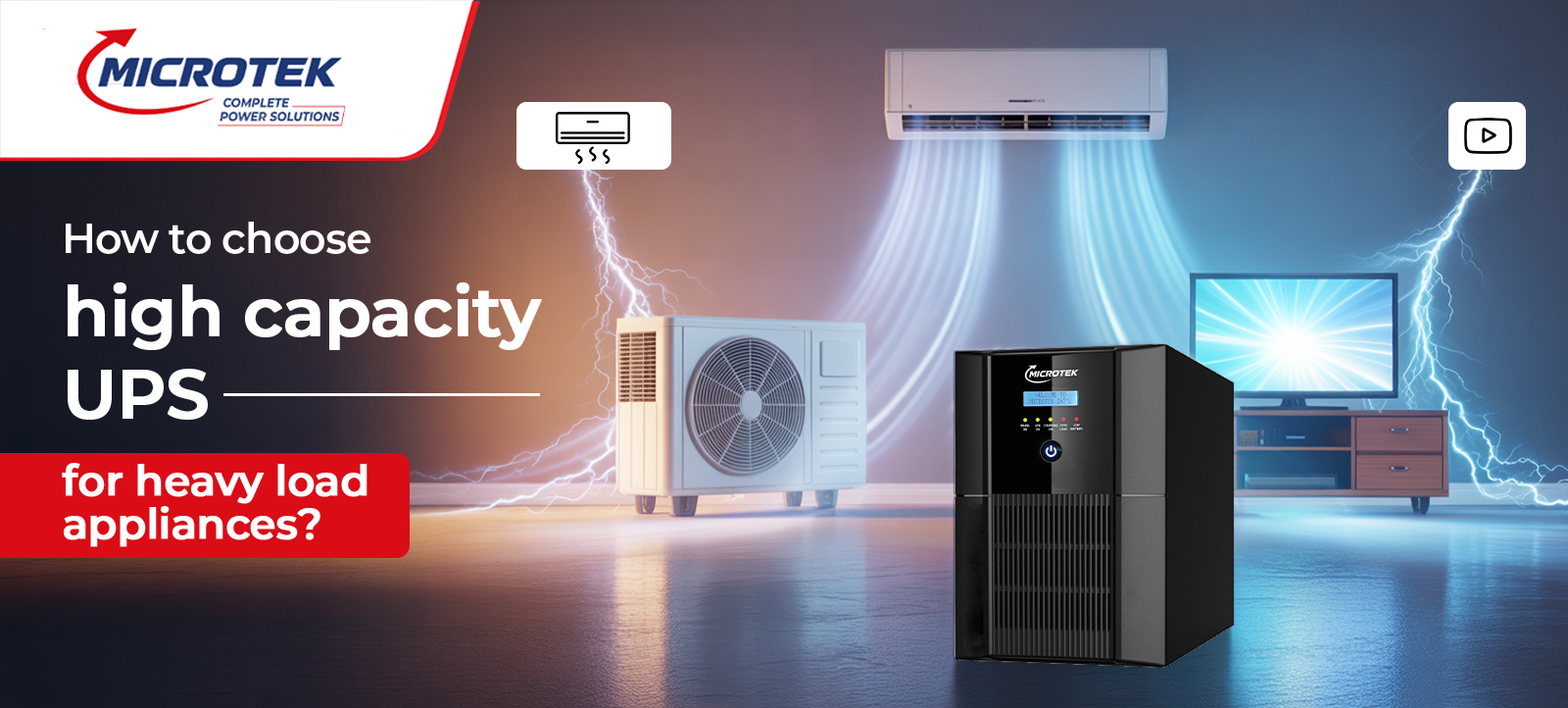
How to Choose a High-Capacity UPS for Heavy Load Appliances
Heavy appliances like air conditioners, washing machines, microwave ovens, refrigerators and water pumps are essential to home comfort and office productivity. During frequent power outages, a standard inverter simply cannot handle these loads — it overloads, shuts down, or loses reliability. This is where a high-capacity Jumbo UPS becomes indispensable.
What Is a High-Capacity UPS?
A high-capacity UPS is a robust power backup system designed to support higher electrical loads for longer durations than a standard home inverter. Unlike regular UPS units built for lights, fans or small electronics, heavy-duty Jumbo UPS models reliably operate heavy appliances during outages. They deliver pure sine wave output, advanced overload detection and superior protection systems.
Typical capacity options range from 2 kVA through to 4 kVA, 6 kVA and above, depending on your requirements.
Key Factors to Consider
1. Power Rating — Know Your Load
Start by listing all the appliances you want backed up and noting their wattage. Add these together to calculate your total load. Always choose a UPS with capacity exceeding this total to ensure reliability and prevent overloading.
Example:
AC (2 kW) + Microwave (1.2 kW) = 3.2 kW total → select a UPS rated above 3.5 kW
2. Pure Sine Wave Output
Heavy appliances and sensitive electronics like ACs, refrigerators and kitchen appliances work best — and safely — with pure sine wave power. This output mirrors clean utility power and prevents overheating or motor malfunction.
3. Backup Time and Battery Compatibility
For heavy-load applications, deep-cycle tubular or high-capacity batteries are advisable. They provide consistent power and withstand repeated discharge-and-charge cycles. Ensure the UPS supports the battery type you intend to use and charges it efficiently.
4. Intelligent Controls and Protection Features
- Smart Overload Sense: Avoids nuisance tripping during sudden load surges
- Short Circuit Protection: Safeguards the UPS and connected appliances during electrical faults
- LCD/LED Display: Shows real-time input voltage, output power and battery level
- Generator Compatibility: Ensures seamless operation alongside backup generators
5. Build Quality and Warranty
A UPS used extensively needs strong build quality, efficient heat management and a warranty that reflects long-term confidence. Look for manufacturers that offer extended warranties on both the UPS unit and battery systems.
Step-by-Step Selection Checklist
- List your appliances and record each one's wattage
- Calculate total load and select a UPS with greater capacity
- Confirm the UPS delivers pure sine wave output
- Choose appropriate battery capacity for your desired backup duration
- Verify protection features: overload sensing, short circuit protection and real-time display
- Confirm generator compatibility if needed
- Check after-sales service network and warranty terms
Expert Recommendation:
By investing in a properly sized high-capacity UPS with pure sine wave output and intelligent protection, your heavy appliances will run safely and efficiently during every power cut.
Frequently Asked Questions
Q. What is the difference between a normal UPS and a high-capacity UPS?
A normal UPS handles lights, fans and small electronics. A high-capacity UPS is designed for heavy appliances like ACs, washing machines and microwaves, with longer backup time, pure sine wave power and stronger protection.
Q. Can a high-capacity UPS run an air conditioner?
Yes, provided the UPS has an adequate VA/Watt rating and is paired with an appropriate battery.
Q. How long does backup last for heavy appliances?
Backup duration depends on total load and battery capacity. Larger batteries (high Ah tubular types) provide greater backup time. Always match battery capacity to your UPS and load requirements.